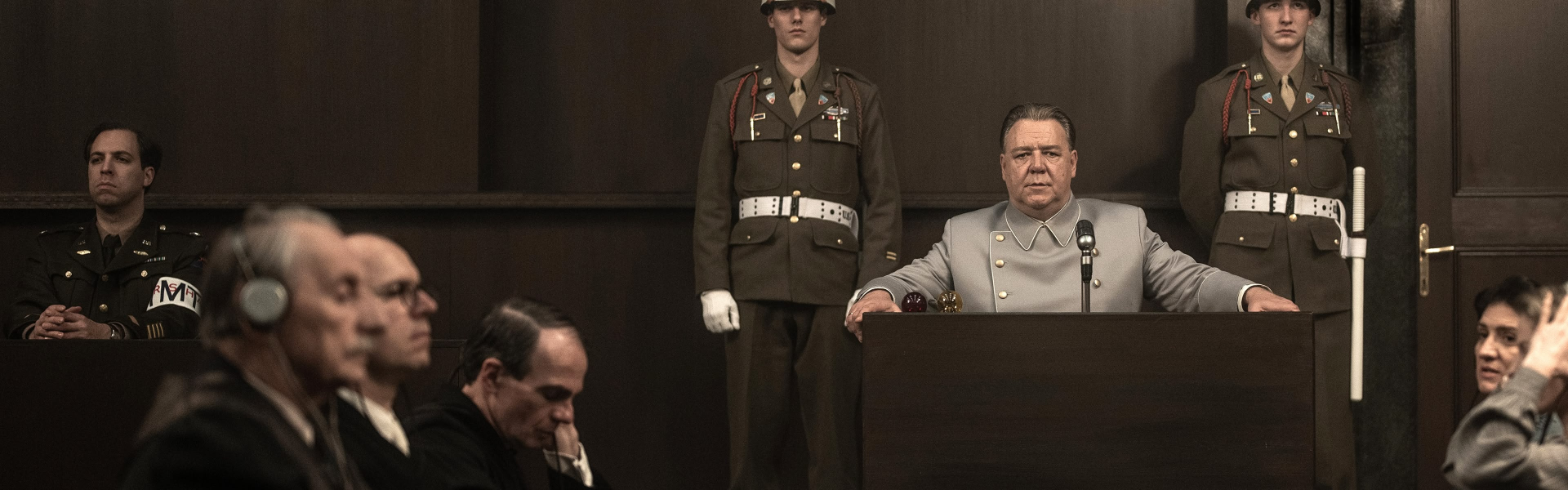
'Nuremberg' is a compelling historical drama that takes viewers on a profound journey into the psyche of Nazi leaders after World War II. The film intricately weaves the story of US Army psychiatrist Douglas Kelley, who is tasked with evaluating the mental fitness of high-ranking Nazi war criminals before their trials.
Set against the backdrop of a world grappling with the aftermath of one of history's darkest periods, 'Nuremberg' not only portrays the chilling reality of the Nuremberg Trials but also delves deep into the complex relationship between Kelley and Hermann Göring, one of Hitler's most notorious commanders. As Kelley conducts his evaluations, he becomes increasingly obsessed with understanding the essence of evil, leading to a gripping psychological battle that raises profound questions about morality, humanity, and the capacity for darkness within us all.
Trailer

The Historical Context of Nuremberg
'Nuremberg' is based on true events and adapted from the book 'The Nazi and the Psychiatrist'. It captures the tense atmosphere of post-war Europe, where the Allied forces sought to bring justice to the perpetrators of the Holocaust and other war crimes. The film's setting is crucial, as it reflects a time when the world was trying to comprehend the magnitude of the atrocities committed during the war.
The Nuremberg Trials represented a landmark moment in international law, establishing precedents for prosecuting war crimes and crimes against humanity. This historical context enriches the narrative of 'Nuremberg', making it not just a film about individuals, but a commentary on the broader implications of justice and accountability in a fractured world.
Character Dynamics: Douglas Kelley and Hermann Göring
At the heart of 'Nuremberg' lies the intense relationship between Douglas Kelley, portrayed by Rami Malek, and Hermann Göring, played by Russell Crowe. Kelley is a complex character, embodying the struggle between duty and the moral dilemmas posed by his task. As he interacts with Göring, the film explores the psychological warfare between the two men.
Göring is depicted as a charismatic yet deeply flawed individual, whose bravado masks a profound understanding of the evil he represents. The dialogues between Kelley and Göring are charged with tension, as they engage in a battle of wits that reveals not only their respective ideologies but also their vulnerabilities. This dynamic is pivotal in illustrating the film’s exploration of the nature of evil and the psychological scars left by war.
The Performance of the Cast
The performances in 'Nuremberg' are nothing short of extraordinary. Rami Malek brings a nuanced portrayal of Douglas Kelley, capturing the psychiatrist's internal conflict and moral quandaries as he navigates his role in the trials. His ability to convey vulnerability while maintaining a strong presence on screen is commendable.
On the other hand, Russell Crowe’s portrayal of Hermann Göring is both chilling and captivating. Crowe manages to embody the complexities of a man who was both a high-ranking official and a deeply troubled individual. The chemistry between Malek and Crowe elevates the film, making their interactions the highlight of this psychological drama.
Thematic Exploration of Evil
'Nuremberg' goes beyond mere historical recounting; it delves into the philosophical questions surrounding the nature of evil. Kelley’s obsession with understanding why individuals like Göring committed such heinous acts serves as a powerful narrative device that invites the audience to reflect on the darker aspects of human nature.
The film challenges viewers to consider whether evil is an inherent trait or a product of circumstance. As Kelley grapples with these questions, the film encourages a deeper understanding of the complexities of morality, pushing the boundaries of what it means to be human in the face of atrocity.
Conclusion
'Nuremberg' is a thought-provoking film that masterfully blends historical events with psychological depth. Through its compelling performances and rich thematic exploration, it invites audiences to engage with difficult questions about morality, justice, and the human capacity for evil. As we reflect on the lessons of the past, 'Nuremberg' serves as a poignant reminder of the importance of understanding our history to prevent the repetition of such horrors in the future.

